
A Whimsical Feline Guide to Applying the 10 Principles of Intuitive Eating for Humans

Intuitive Eating is a way to evolve your relationship to food that bolsters inner peace and holistic wellbeing. This includes granting yourself unconditional permission to eat alongside a connection to your physical, emotional, social, and mental cues of hunger and fullness. For more context on this eating pattern, please feel free to check out Elyse Resch and Evelyn Tribole’s foundational work on the topic and other articles written by Sunrise Nutrition clinicians:
How to Start Intuitive Eating | Where to Begin & Is It Right For You
Intuitive Eating Isn’t for Everyone: What’s Being Overlooked
One of the most challenging and excruciatingly slow steps along the journey toward Intuitive Eating is transitioning from theoretically accepting it to actually embodying the practice. You could consider this step moving from yeah-sure-it’s-ok-for-everyone-else-but-certainly-not-me to making it a part of your life. It takes consistently challenging yourself, making space for gradual change and the unknown, and a whole lot of patience.
During my personal experience of pursuing a version of Intuitive Eating, I got creative to endure the discomfort of those tasks. I used my senior cat, named Catt, as an avenue for this by observing his behavior and interpreting the similarities with intuitive eating. I will share my findings here. OK, yes, technically cats and humans are different. However, humans can be blessed by the wisdom and absurdity of pets to learn personal lessons about responsibility, love, acceptance, and loss all the time. Why not use them to internalize the 10 principles of Intuitive Eating?
1. Reject the diet mentality
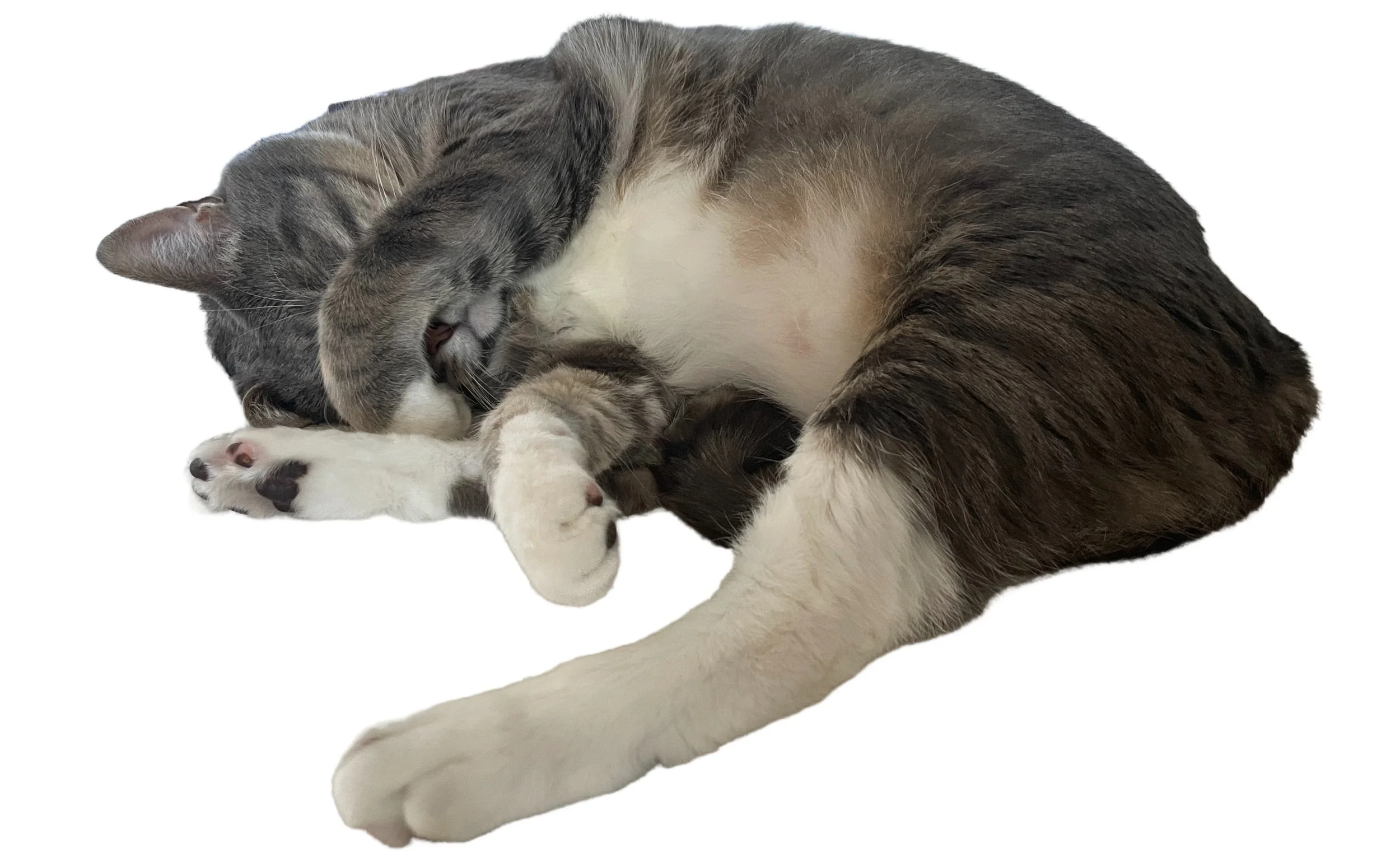
Catt is a free feeder. No diet kibble. No strict meal time based on a human schedule. No serving sizes or portion control. No pursuit of weight loss through calorie restriction. He naturally grazes throughout the day. By stomping on my ribs when I’m sleeping or following me around the house meowing loudly, he ensures that I keep his bowl full. He advocates fiercely for unconditional access to food. He fully rejects anything to the contrary.
2. Honor your hunger
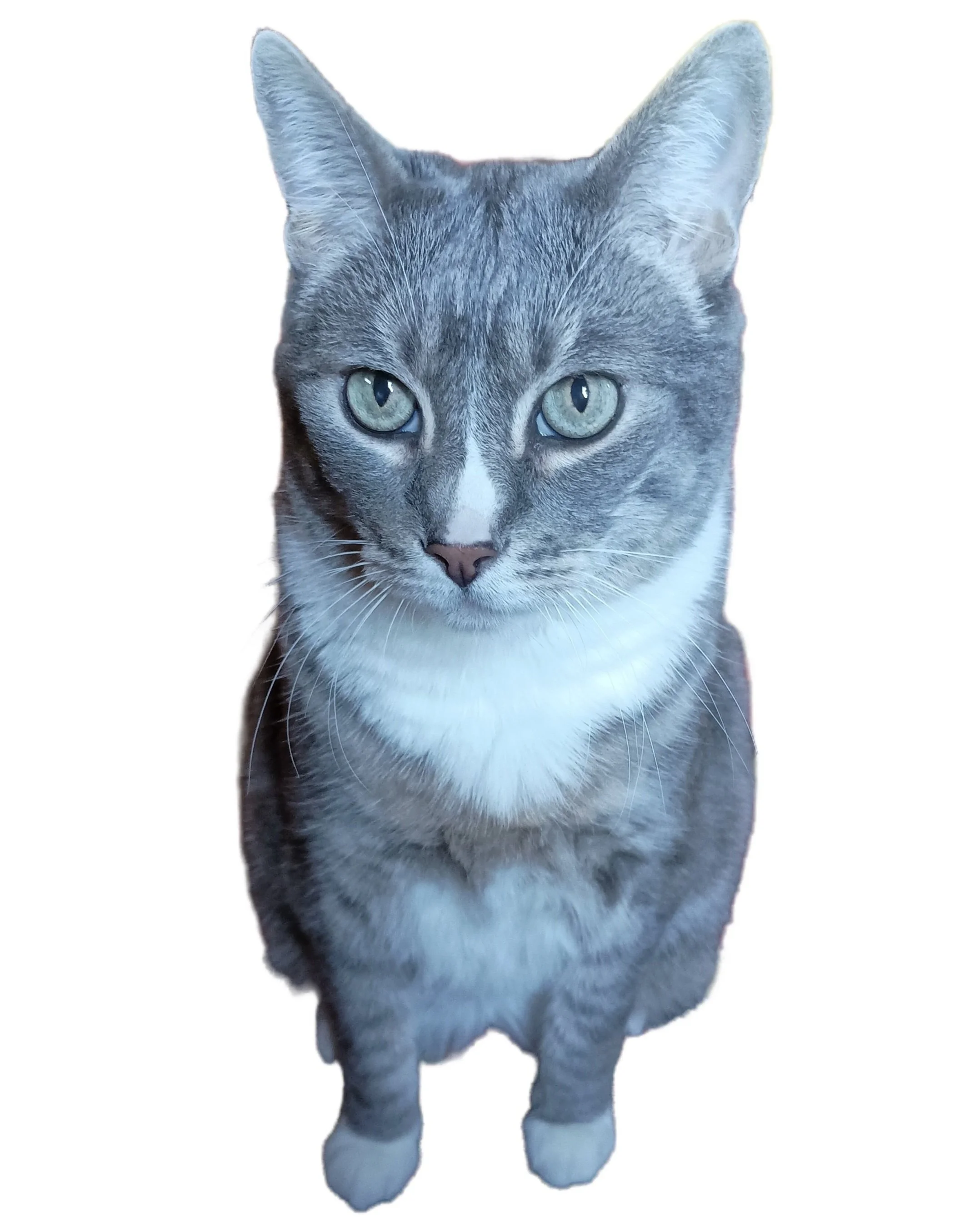
Catt eats when he is hungry. The array of physical sensations indicating hunger cue him to initiate a meal. Maybe his tummy starts grumbling, he notices a feeling of emptiness in his stomach, or he gets the taste of digestive enzymes in his mouth. There is no moral value assigned to his hunger or lack thereof. He does not need to earn hunger through exercise or lengthy intervals since his last meal. It simply exists naturally because he is a living creature. If he is hungry while cuddling with his favorite person or entertaining guests, he will excuse himself to get a snack. He does not seem to experience shame, guilt, or any kind of judgment in response. He can simply observe the sensations and eat without producing negative beliefs about himself, painful emotions, and increased suffering.
3. Make peace with food
Catt is serenely curious about all foods in the household. He usually requests a sniff, maybe a lick or tiny chomp, and will try more if it strikes his fancy. The message he sends me is that he believes all foods are allowed. After inquiring, he authentically chooses what to eat based on what he likes, feels good in his tummy, and is available. He does not concern himself with what foods are “fatty,” “clean,” or “ultra-processed.” No food is “right” or “wrong,” “good” or “bad.” Food simply exists.
Additionally, Catt is set up to have a regulated nervous system while eating. He eats in a consistent, low traffic spot without distraction that provides a pleasant context in which he can purr and nosh. This helps him to feel safe so his body can comfortably and effectively receive nourishment.
4. Challenge the food police
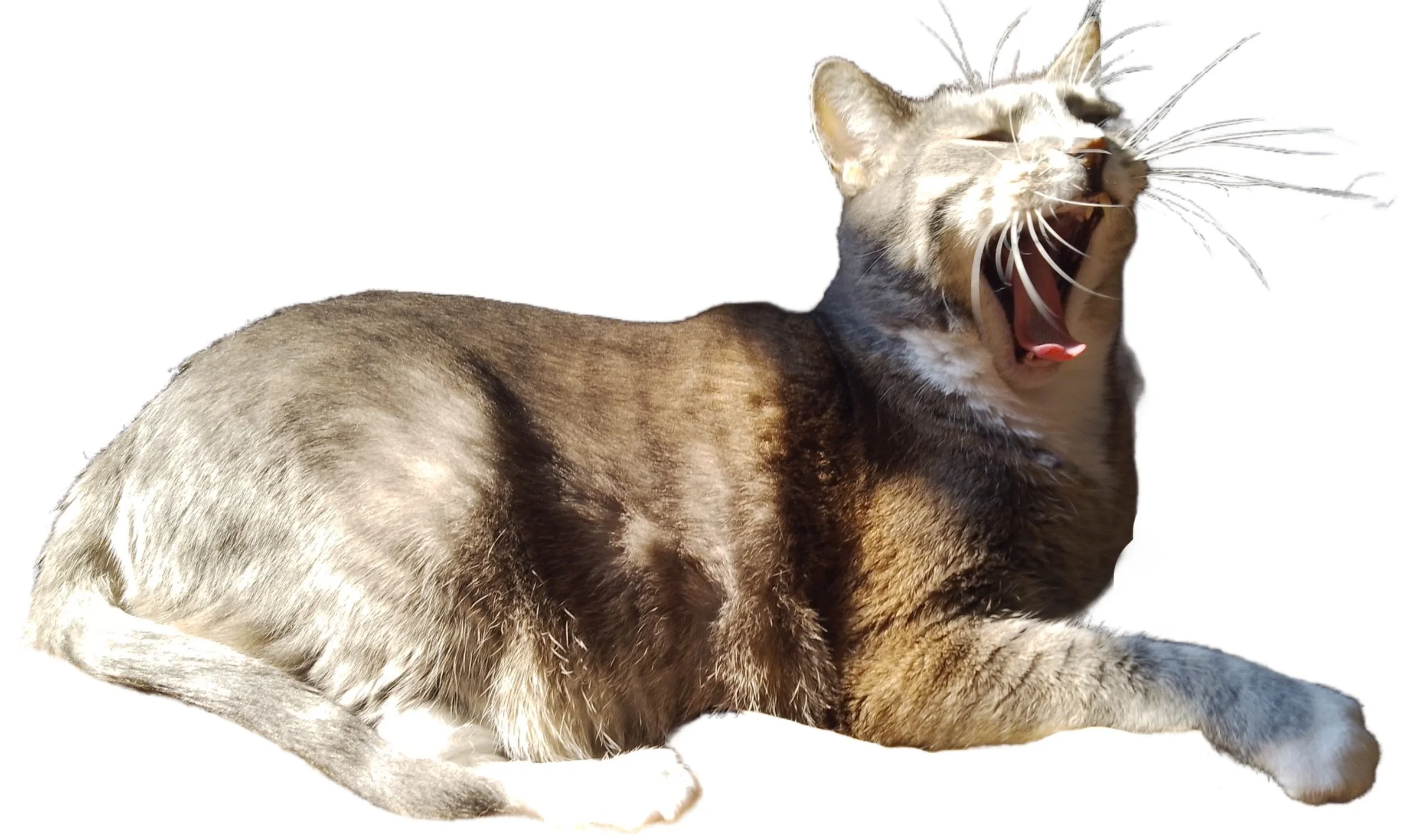
There is lots of messaging about the “right way” to feed cats. For pets as well as humans, consumers are encouraged to conflate marketing with expert nutrition advice. This means that rather than being supported to understand reputable and scientifically backed information, people in charge of purchasing food are peppered with oversimplified and often dangerously incorrect information about food and health spun into catchy slogans, convincing ad copy, and misleading packaging. Ultimately, I don’t have expertise in feline nutrition so Catt encourages me to support the eating habits that make him feel safe and healthy. I inherited him when he was 9 years old after he had been free feeding all his life. So we maintained consistency rather than arbitrarily trying to force the “correct” way of feeding. Consistency, enjoyment, and an embodied sense of safety are valid indicators of health. Perhaps more valid than the number on the scale.
5. Feel your fullness
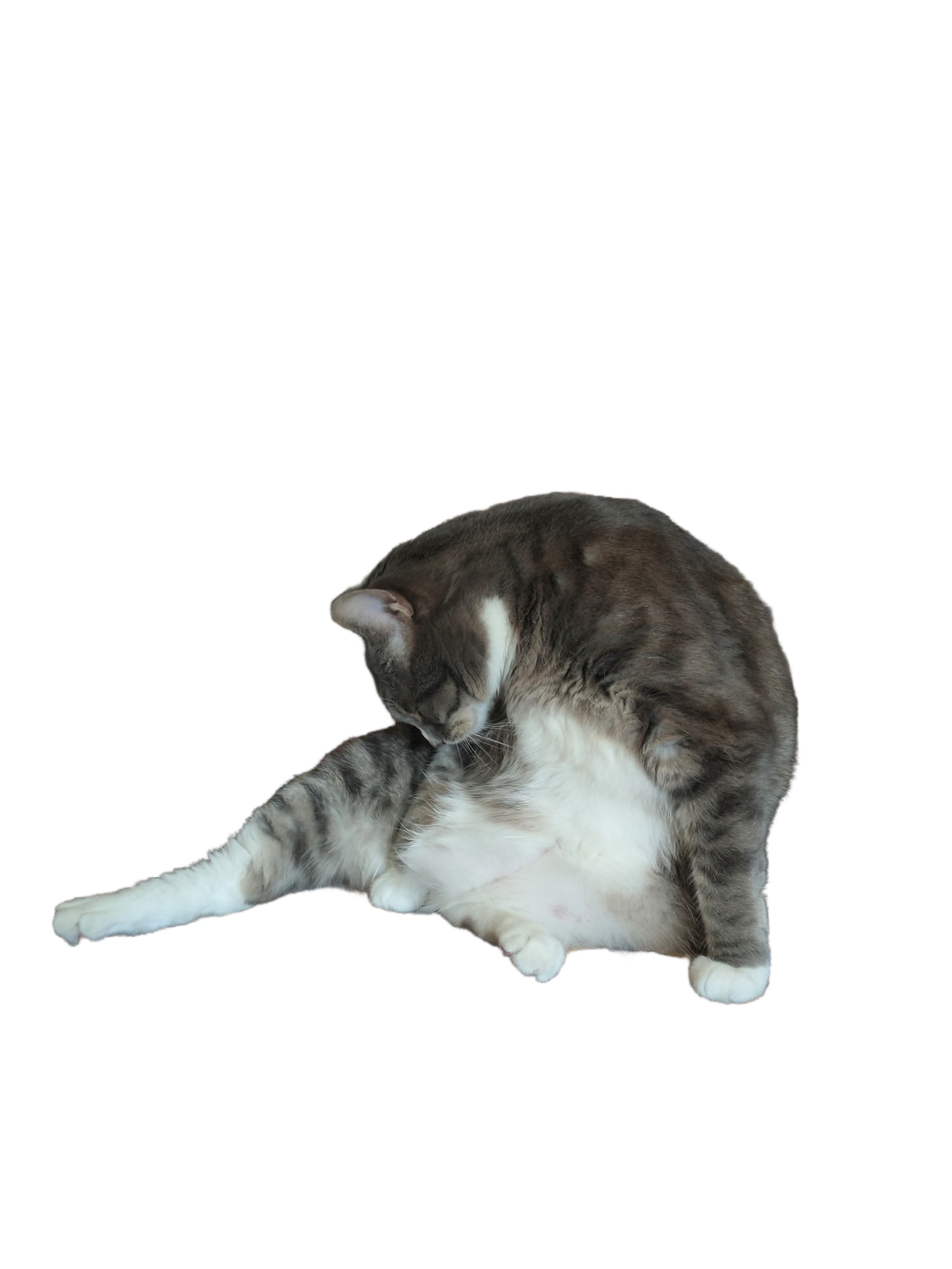
During meal times there are no distractions, Catt is present and embodied, listening to the messages of fullness his fuzzy body sends. The end of Catt’s meal or snack times are signaled by his level of fullness. If he feels full and satisfied, he concludes his meal. They are not signaled by his bowl being empty, the amount of time elapsed, or a busy schedule. If he has “cleaned his plate” and he still feels hungry, you had better believe he fiercely advocates for more kibble by meowing at me, day or night, until his bowl is refilled. Even if he only wants another bite or two. When Catt feels full, he does not even consider continuing to eat. He does not experience benefits from eating beyond fullness. Mealtime is usually followed by purring and a nice kitty bath. It’s not followed by guilt, shame, racing thoughts, or a drive to compensate for eating. He does not seem to experience mental and emotional discomfort with the physical sensation of fullness.
6. Discover the satisfaction factor
After 12 years, I would expect Catt to lose some of his feline enthusiasm for his dry, pungent kibble. Somehow though, every day, he is utterly stoked. When I refill his bowl, he comes running to supervise, sniff, rub my legs in thanks, and purr. As you know, he is curious about what the humans eat too. If it is something that is enticing to his senses and enjoyable, like ice cream or potato chips, he will help himself to a few slurps or bites if the owner of the food allows. If it turns out to be something he does not feel drawn to, he gladly turns it away. Even foods he “should” like, such as tuna or those squeezable tubes of wet cat treats. He does not experience “should.” He sticks with “yummy” or “no thanks.”
7. Cope with your feelings without [only]* using food
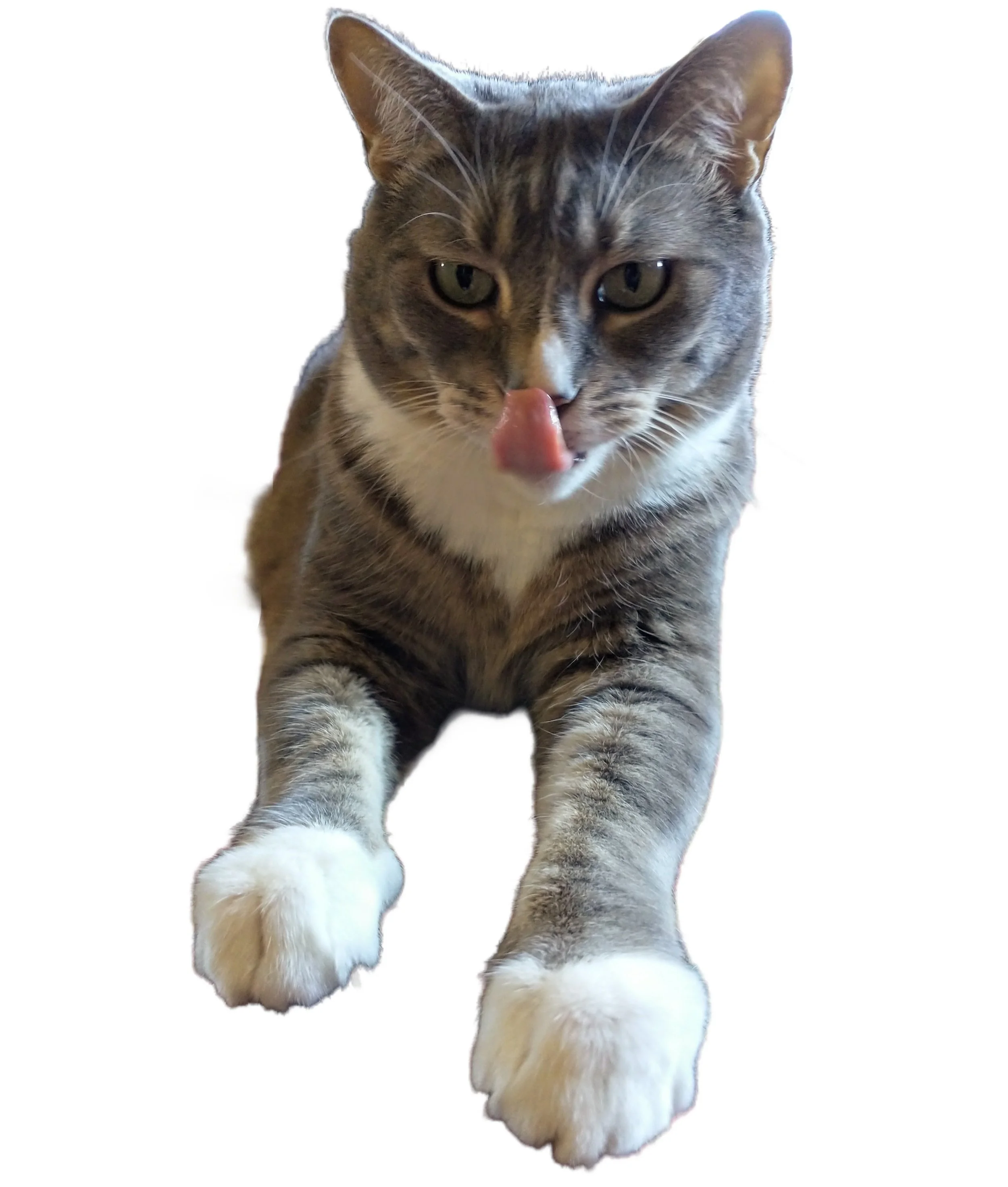
When Catt is distressed, he seeks support. He requests cuddles from friends, soothes himself with a bath, or finds a location in which he feels physically safe. In utilizing these adaptive coping skills, he is able to support his nervous system in calming. When Catt is feeling joyful, he expresses and shares it with the world. He hugs on his friends, sings and squeaks joyful celebration, and zooms around the house with bursts of energy. Catt has great means of making space for emotions and coping with them. It would also be normal for Catt to self-soothe by eating food. It’s a perfectly valid way of coping that has been around for hundreds of thousands of years and aided in human evolution. He does not utilize food alone for numbing, avoiding, or suppressing. Rather he uses a variety of tools to tolerate and work through his emotions, one of which could be eating.*added by author of blog post
8. Respect your body
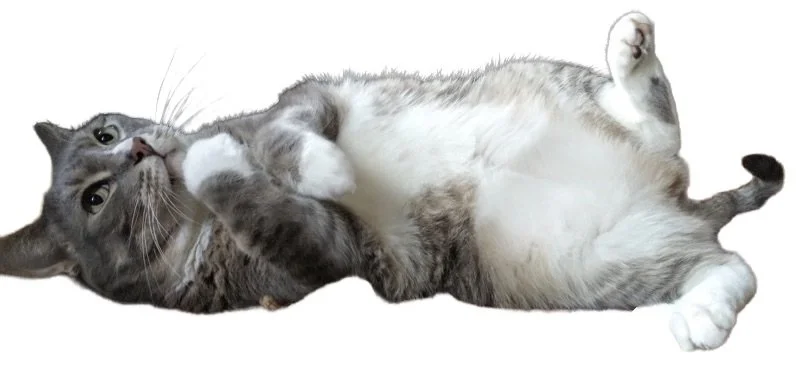
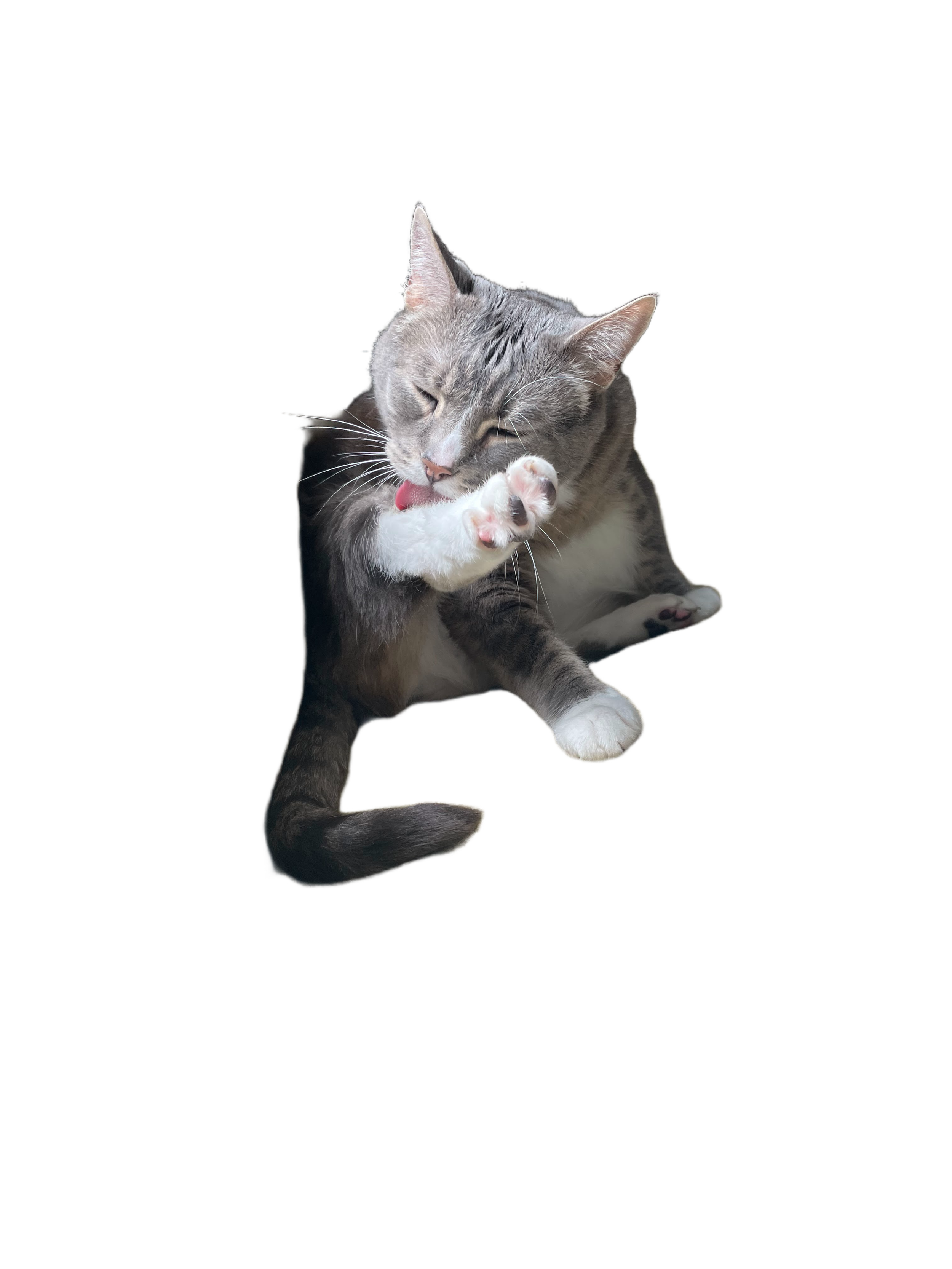
Catt is at ease in his body. I have never witnessed a more comfy being. He demonstrates complete acceptance of his body, whether or not he fits beauty and wellness standards. He does not compare his body to those of other kitties or his past self. He is never sucking in his tummy, checking his appearance in the mirror, or trying to prevent his primordial pouch from jiggling as he roams around. Instead, he grants everyone around him the honor of witnessing his body. He invests lots of time caring for his body through sleep and hygiene. His belief that his body deserves care no matter what is evident.
9. Exercise: feel the difference
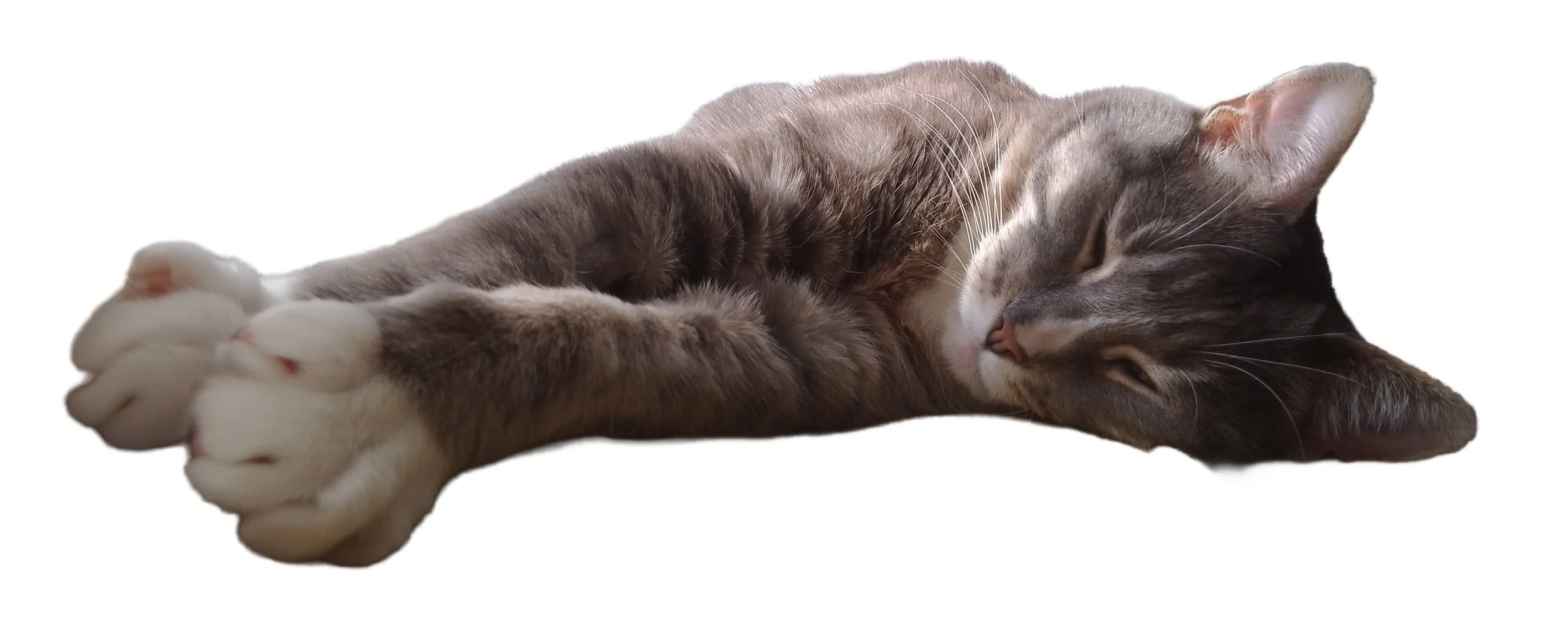
While Catt seems to prefer leisure to exercise most of the time, he is still able to demonstrate a healthy relationship to movement. Catt engages in joyful movement without compulsivity or self-consciousness. Whether he is bounding up the stairs or leaping gracefully onto tables, he engages in movement for the love of movement every day. He works hard to maintain flexibility in order to have ease and softness in rest and grooming. He invests effort in maintaining mobility to swiftly follow his friends around the house. It is clear that his motivation for engaging in movement is fueled by taking delight in his body and life.
10. Honor your health: gentle nutrition
Catt and I took a stand for gentleness after we took him to his first vet visit 2 years ago. The veterinarian encouraged limiting Catt’s food intake or switching him over to diet kibble in order to decrease his weight. That might have been a reasonable recommendation. However, it did not feel gentle to remove his unconditional access to food and provide him with less than he is accustomed to. That is a stressor to an animal. I’m Catt’s caregiver with the responsibility to ensure his wellbeing. Instead I reflected on what an authentic definition of cat health was to me. This includes physical, emotional, and mental wellbeing. I want to prioritize enjoyment, limit stress, and support ongoing weight stability. For humans, weight stability is a more accurate indicator of health than a single measure compared to population statistics. With this in mind, I made the choice to be gentle with my little guy and kept him free feeding with his beloved kibble.
Viewed through the lens of a fuzzy little kitty cat, intuitive eating does not seem so hard, right? The unfortunate truth is that applying intuitive eating can be incredibly challenging for people who have grown up surrounded by diet and wellness culture internalizing a lack of trust in our bodies and a belief that we have to mentally exert control over our physical experience. Hopefully Catt’s example can serve as a step along the way to pursuing liberation from a challenging relationship with food, body, and movement.
*Disclaimer - I acknowledge there are many opinions about caring for animals. I am not making recommendations about animal feeding because I have no expertise there! I just got lucky to have been matched up with my strange little guy via the universe’s random cat distributor. This blog post was written with the intent to be silly and supportive of the wellbeing of humans.
Reference: Tribole, E. & Resch, E. (2012) Intuitive Eating: A Revolutionary Program That Works New York, NY: St. Martin’s Press
Written by Sarah Douglas, CN, LMHCA. Sarah is a therapist and nutritionist specializing in supporting healing relationships to food, body, and movement in Seattle, WA. She offers both in-person and telehealth services. Her cat, Catt, is a crucial member of the Sunrise team.